
Overview
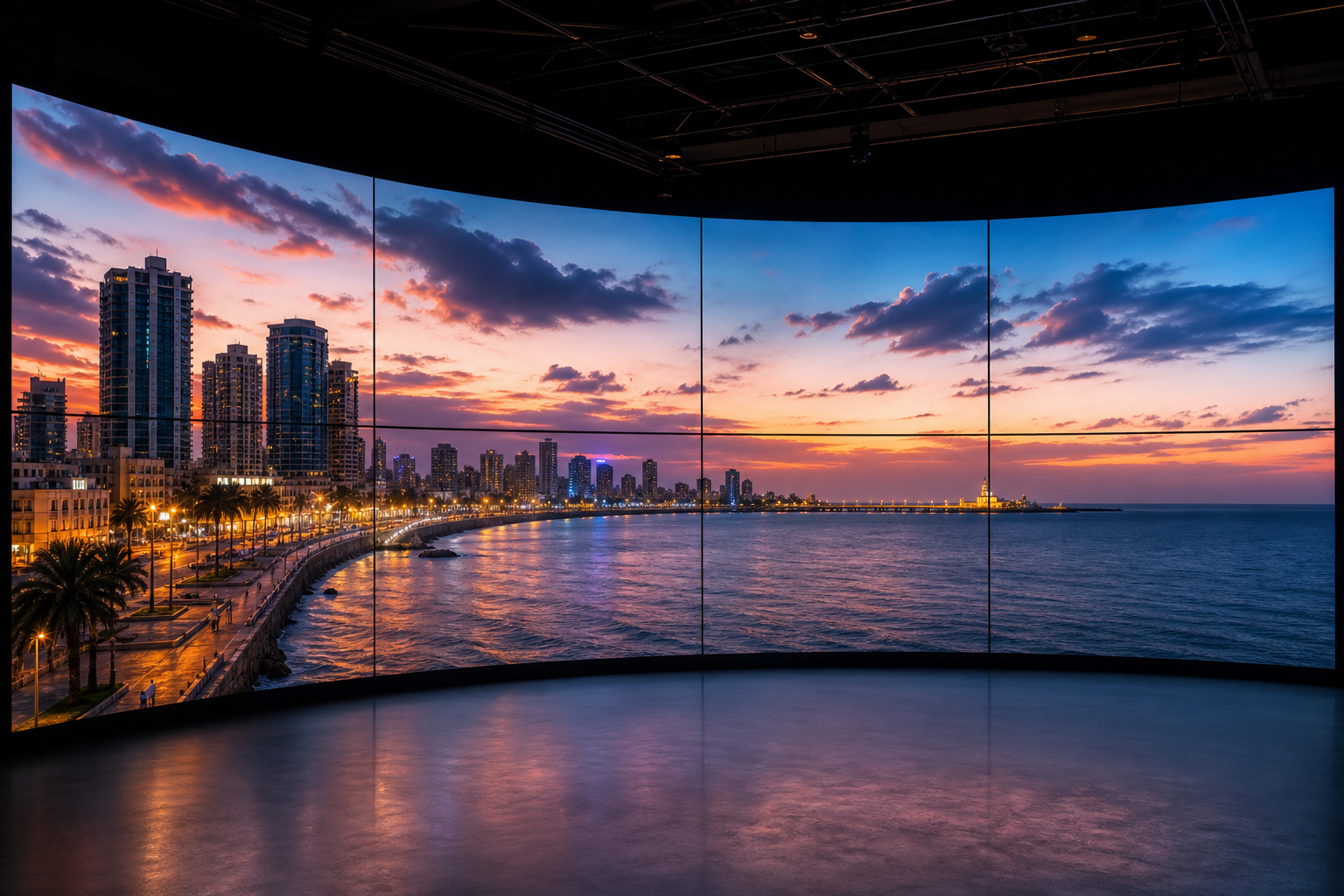
Upstream O3DE has no built-in multi-display cluster path. DawnEngine ClusterDisplay lets multiple render nodes share the same logical time, camera state, and frame boundary while drawing different screen viewports — so CAVE, wraparound simulators, LED walls, and venue displays form a continuous image.
Current status is MVP: static topology, viewport split, off-axis projection, and master-driven frame sync are available; disabled by default and enabled via settings or launch args. Virtual production / ICVFX, media I/O, and color pipelines are out of scope. For browser cloud streaming, see Dawn Stream.
For single-machine multi-GPU frame-rate scaling, use multi-GPU AFR — a separate capability.
Key Capabilities
- Static topology: node and screen mapping with bezel and overlap support
- Viewport mapping: split output by node / window / viewport
- Projection: off-axis by default, plus camera and manual frustum options
- Frame sync: master-driven frame snapshots and present barriers
- Ops: launcher, editor mosaic preview, and failover policy
Use Cases
- Training simulators, CAVE, and wraparound displays
- Digital-twin command walls and venue LED
- Projects that need coordinated multi-host output
Related Features
Venue-scale scenes can add double-precision coordinates; browser demos can use Dawn Stream. Single-machine multi-GPU frame-rate boost: AFR. Manuals: docs site.